Built for living , loved for a lifetime.
About Us

Lorem Ipsum is simply dummy text of the printing and typesetting industry.
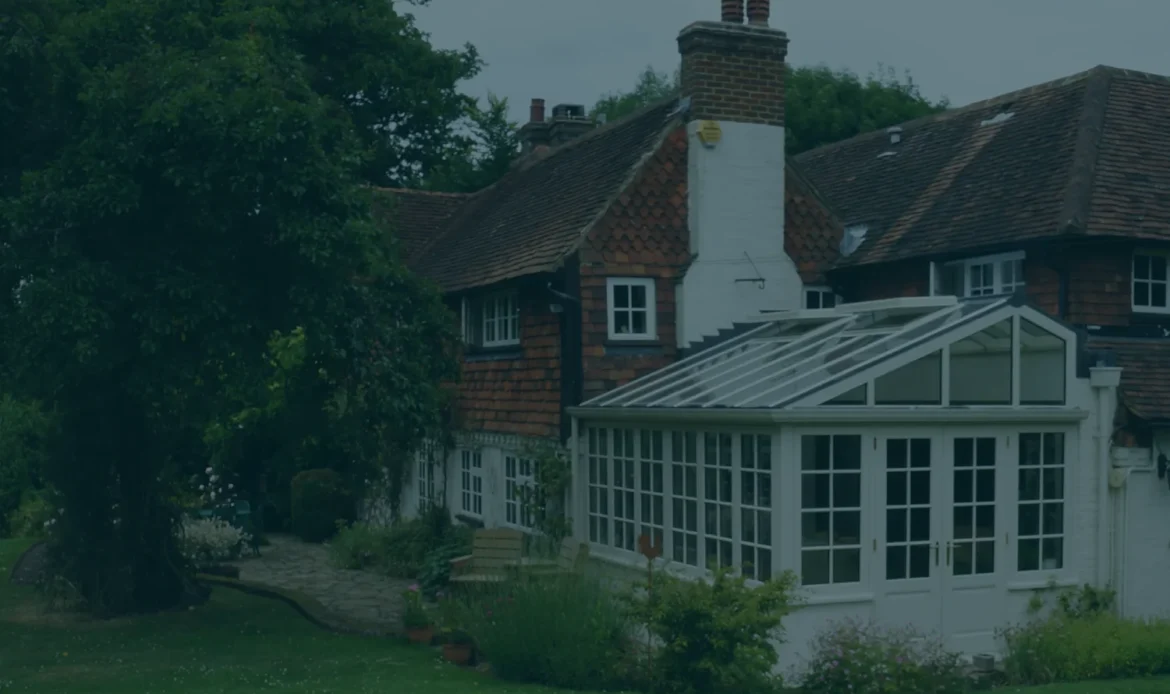
The floor beneath an orangery rarely features in the early mood boards, yet it has a quiet say in everything that follows – from how warm the room feels underfoot to how cleanly the doors sit, how quickly the build progresses, and how well the structure performs for years to come. When homeowners ask about block & beam vs. concrete slab: which is the best base for your orangery?, the honest answer is not a one-word verdict. It depends on the site, the design, and the standard of finish you expect.
For a luxury extension, the base is not simply a structural necessity. It is part of the overall performance of the room. A beautifully proportioned orangery with carefully considered glazing, a painted timber superstructure and refined interior detailing still relies on what sits below ground. Get that wrong, and compromises tend to appear elsewhere.
Both systems are proven, widely used, and entirely capable of supporting a high-quality orangery when designed properly. The difference lies in how they behave on site and what they ask of the rest of the build.
A concrete slab is exactly what it sounds like – a solid ground-bearing base poured over prepared hardcore, insulation and membranes. It creates a single continuous platform and is often familiar to homeowners because it is commonly used in extensions.
Block and beam uses pre-cast concrete beams laid between the supporting walls, with infill blocks placed between them. Above that comes insulation, screed and the finished floor build-up. Rather than bearing directly across the whole ground surface, the load is transferred through the beams to the supporting structure.
Neither is inherently superior in every scenario. The better choice depends on ground conditions, drainage, access, programme, floor levels and the complexity of the design.
An orangery is not just an extra room. It is typically a glazed, light-filled architectural addition that must connect gracefully with the house while meeting modern expectations for comfort and efficiency. That creates tighter tolerances than many people realise.
Large glazed elevations, carefully detailed masonry piers, roof lanterns and doors all benefit from a stable, accurately formed base. So does the interior finish. If your orangery is intended to become a kitchen-living space, a garden room for year-round use or an elegant dining area, the floor structure affects thermal performance, finished levels and the overall sense of solidity.
This is why the conversation should never be reduced to cost alone. The cheapest route at the foundation stage can become expensive if it introduces delays, awkward level changes or long-term performance issues.
A concrete slab often suits straightforward sites with predictable ground conditions and good access. Where the sub-base can be well prepared and the excavation is uncomplicated, it can provide a stable and efficient solution.
It is often favoured for its simplicity. The build-up is familiar to many groundworkers, and when the design is relatively conventional, it can be an effective way to create a solid platform. For some projects, it also works well with underfloor heating because the slab and screed can contribute useful thermal mass, helping the room hold heat steadily.
There is, however, a note of caution. A ground-bearing slab depends heavily on the quality and consistency of the ground beneath it. If the site includes made-up ground, variable soil conditions or a greater risk of movement, that simplicity can start to fade. More excavation, more preparation and more engineering input may be needed to make it suitable.
Moisture management also matters. Detailing around membranes, insulation edges and the junction with the existing house must be exact. In a premium orangery, small errors at this stage can affect later finishes.
Block and beam is often particularly useful on sites where ground conditions are less predictable, where there is a need to span over voids, or where a suspended floor offers practical advantages. Because the beams transfer loads to the supporting walls rather than relying on the entire ground surface, the system can be more forgiving in certain conditions.
It can also help on sloping plots or where levels need careful management. In some cases, it reduces the amount of excavation required and avoids some of the uncertainty that can come with variable sub-soils. That makes it attractive for more complex builds and for projects where risk reduction matters as much as speed.
Another benefit is programme control. Pre-cast components can be installed relatively quickly, and there is less dependency on large wet pours curing before the next stage proceeds. On well-managed projects, that can make sequencing easier.
The trade-off is that block and beam introduces a slightly different floor build-up, and the detailing above it needs just as much care. Insulation strategy, screed depth and finished floor level all need to be designed properly from the outset. It is not difficult, but it does reward joined-up thinking.
For most homeowners, what matters is not the engineering diagram but how the room feels in February. A well-designed orangery should feel as comfortable as any principal room in the house, not like a bright but chilly afterthought.
Both concrete slab and block and beam can deliver excellent thermal performance when paired with the right insulation and heating strategy. Problems tend to arise not because one system is fundamentally cold and the other warm, but because the detailing has been treated casually.
A slab can offer good thermal mass, which helps moderate temperature swings. Block and beam can also perform very well, but it relies on careful insulation placement to avoid cold bridging and to create a floor that feels stable and warm. In either case, underfloor heating is often part of the conversation in an orangery, especially where the new space opens into a kitchen or family area.
The key point is this: comfort is designed, not assumed. The foundation choice must be considered alongside glazing specification, ventilation, heating output and floor finish.
Homeowners often underestimate how much site logistics influence the right answer.
If access is tight, getting concrete to the exact location can be more involved than expected. If the site is awkward or heavily landscaped, a system that reduces wet trades or simplifies sequencing may be preferable. Equally, if the extension footprint is very straightforward and the ground conditions are kind, a slab may keep things efficient.
This is where an integrated design-and-build approach becomes especially valuable. The best decisions are made when structural thinking, architectural intent and practical installation are aligned early, rather than passed from one party to another in fragments.
Yes, cost matters. But it should be read in context.
A concrete slab may appear more economical on paper for a simple site. Block and beam may carry a different material cost but offer savings through reduced excavation, faster installation or lower risk in challenging conditions. The true comparison is not line against line on a spreadsheet. It is total project value – including programme certainty, performance and the quality of the finished room.
For discerning homeowners, the most expensive mistake is often choosing a base that works in theory but complicates the wider build.
If the site is straightforward, the soil is reliable and the design is uncomplicated, a concrete slab can be an excellent base for an orangery. It is tried, familiar and capable of delivering a solid, comfortable result.
If the ground is less predictable, the levels are more complex or the project benefits from a suspended floor approach, block and beam may be the wiser choice. It can offer reassurance, flexibility and strong structural performance where a slab would ask more of the site preparation.
For premium orangeries, the right answer is rarely chosen in isolation. It comes from understanding the whole scheme – the architecture, the threshold details, the intended use of the room, the heating strategy, the existing house and the conditions below ground. That is where experience matters most.
At Farrow & Jones, that early technical thinking sits alongside the design vision, because a room that looks beautiful on completion should also feel composed, comfortable and built for living from the very first day. The best base, in the end, is the one that supports that standard without compromise.
If you are planning an orangery, it is worth treating the floor structure as part of the design conversation from the beginning. The room above it will only ever be as considered as the decisions made beneath it.