
Roof lanterns: A buyer’s guide to bespoke timber lanterns
- October 2, 2026|
- News
Search for “roof lanterns” and you’ll mostly find off-the-shelf aluminium units: a standard box of glass dropped onto a flat roof, sold by the square metre. They do a job. But a roof lantern is one of the most visible architectural features you’ll add to a house, and for homeowners across the Cotswolds, Cheshire, Warwickshire and the Buckinghamshire commuter belt, we find a stock unit rarely matches a period property.
In this guide, we compare aluminium, timber and hybrid lanterns, and make the case for a bespoke timber lantern built as part of the whole structure rather than bolted onto one.
In brief
- A roof lantern is a raised, glazed structure that draws natural light into a room, unlike a flat rooflight or skylight set flush into the roof
- We build lanterns in Sapele mahogany, finished with hand-applied Teknos coatings, alongside aluminium and DIY kit options
- Our glazing options include low emissivity glass, solar control glass and self-cleaning glass with hydrophilic technology
- A lantern on an orangery works differently to one on a flat-roof kitchen extension
Defining a roof lantern
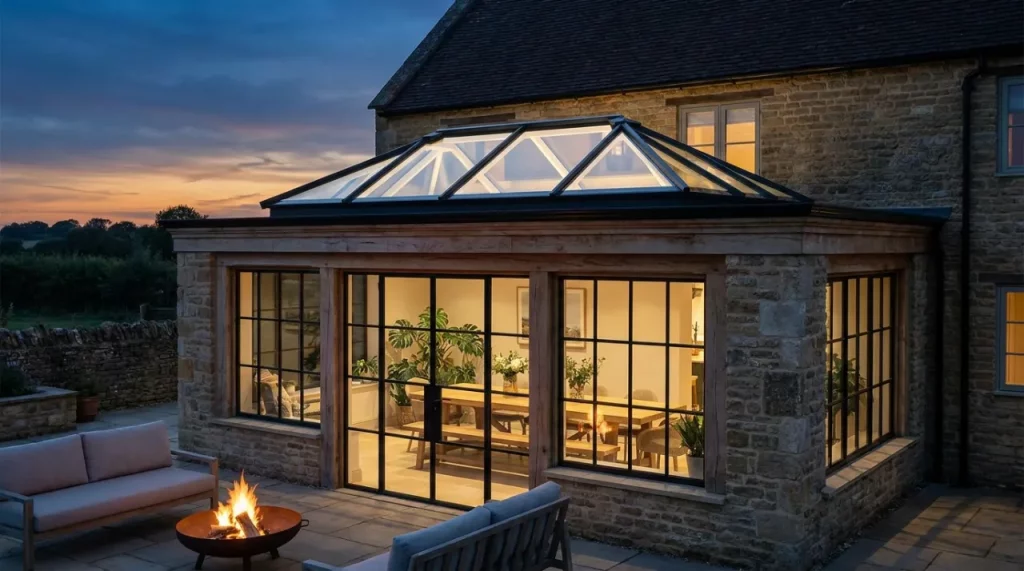
A roof lantern is a raised glazed structure set into a roof, built with a pitch rather than sitting flush. That’s the big difference between a lantern and a rooflight or skylight, which sit flat within the roof plane and let in less light.
Off-the-shelf ranges typically come in a few standard shapes: a traditional ridge lantern, a pyramid or a wide, flush design with minimal glazing bars. We think of our own lanterns the same way, as traditional ridge-like constructions or wide modern-day structures boasting few bars, but we design each one for the specific building rather than picking it from a catalogue.
A lantern does more than light a room, too. As we like to put it, a lantern roof transforms the space into a bright and welcoming sanctuary. Positioned at the ridge, it can also incorporate opening roof vents for genuine ventilation.
Do I need planning permission for a roof lantern installation?
Often not, if the lantern sits within a single-storey extension that stays inside permitted development limits. Permission is more likely if the property is listed, sits in a conservation area or the extension itself needs approval regardless of the lantern.
Aluminium, timber or hybrid lanterns
We offer a genuine range of options for homeowners. We provide DIY roof lantern kits and bespoke skylight solutions for clients seeking flexibility and control, alongside our bespoke Sapele hardwood lanterns. For a period property, we usually recommend timber.
- Aluminium – a standardised, powder-coated frame (over 400 RAL colours), a familiar look and the fastest route to a working lantern
- Sapele mahogany – we choose this over oak or softwood for its stability-to-weight ratio, finished with a hand-prepared, factory-applied Teknos coating system
- Hybrid – aluminium’s low-maintenance exterior over a timber core, for owners who want some aesthetic appeal without the same refinishing schedule
| Aluminium | Bespoke timber | Hybrid | |
| Upfront cost | Lower | Higher, project-specific | Mid-range |
| Lifespan | Good, seals are usually the first thing to fail | Decades, with periodic recoating | Long-lasting frame |
| Thermal performance | Conducts heat more readily than timber | Naturally better insulated, paired with a 20mm insulating spacer | Improved over aluminium alone |
| Aesthetic appeal | Consistent, standardised | Hand-finished joinery styled to the property | A compromise between the two |
Glazing that actually performs
The frame is only half the story. We specify 28mm double-glazed units, two layers of 4mm toughened safety glass around a 20mm insulating spacer for thermal efficiency. Clients can also choose:
- Low emissivity glass, which retains heat during the colder months, with an argon gas option for extra insulation
- Solar control glass, which reflects up to 78% of solar heat and minimises glare
- Self-cleaning glass, using hydrophilic technology that lets rain wash dirt away rather than leaving streaks
The right combination makes a genuine difference to energy efficiency, not just comfort on a sunny afternoon.
Sizing and structural spans
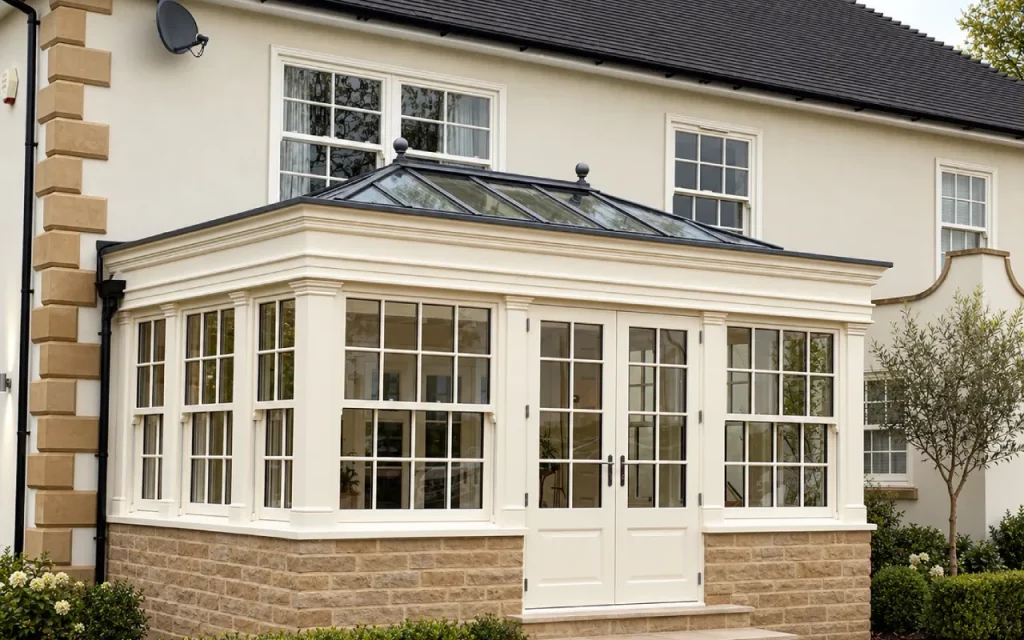
A lantern needs to be proportionate to the available space beneath it, and to whatever is carrying its weight. On the Warwickshire Manor orangery, we used glulam beams engineered to support the bespoke roof lantern, combined with high-span RSJs to create an open-plan room without visible support columns. Getting this right at design stage is what allows a lantern to sit over a wide kitchen-diner rather than a modest box room.
Installation, weathering and realistic maintenance
Every lantern we build goes through the same technical design consultation and structural survey as the rest of the build, so we specify the roof, the glazing and the frame together rather than as separate purchases. We think that’s the right approach: a lantern designed in isolation can end up fighting the roof around it.
Once installed, the Teknos paint system is low-maintenance and formulated specifically for hardwood. We offer maintenance contracts on request, and a member of our team is on hand for long-term care advice.
Orangery lantern vs flat-roof extension lantern
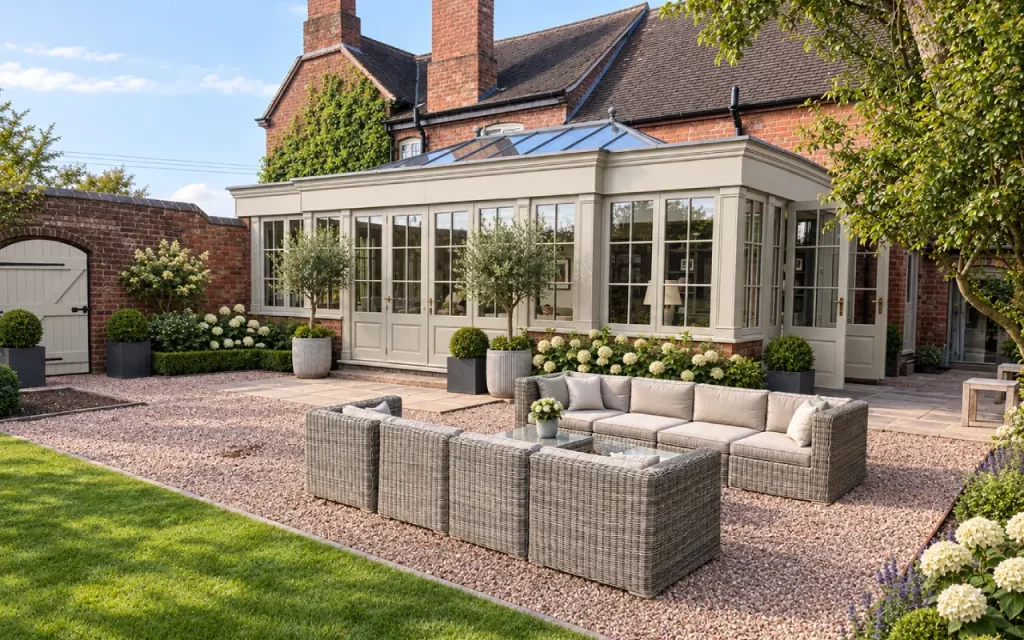
The two aren’t quite the same. An orangery typically has a mainly solid roof with a glazed lantern rising from it, framed by dwarf walls and pillars, so the lantern sits within a piece of traditional architecture. A flat-roof kitchen extension usually has no such masonry surround: the lantern sits directly on a flat roof and often becomes the room’s single largest source of natural daylight.
Each needs the same attention to structural spans, but an orangery lantern is part of a conservatory-style feature, while an extension lantern is usually the room’s main light source on its own.
Which lantern is right for your home
There’s no single best option. A ridge lantern suits a traditional orangery, a flush design suits a contemporary kitchen extension and a hybrid frame suits homeowners who want more natural light without a repainting schedule. What matters, in our view, is treating the lantern as part of the build, not an accessory to it.
Get in touch
We have decades of experience specifying roof lanterns for orangeries, conservatories and kitchen extensions across the UK. For expert advice on the right lantern for your home, call us on 01926 810 291, email [email protected], or tell us about your project and a member of our team will get back to you as soon as possible.